

The Marshall Memo, published 50 times a year since 2003, is designed to keep principals, teachers, instructional coaches, superintendents, and other PreK-12 educators well-informed on current research and effective practices. Kim Marshall, drawing on his decades as a teacher, principal, central office administrator, consultant, and writer, lightens the load of busy educators by serving as your "designated reader." What Kim spends 20 hours creating each week, you can read in 20 minutes.
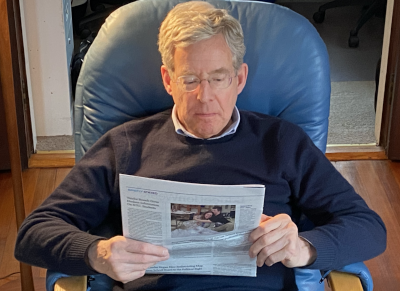
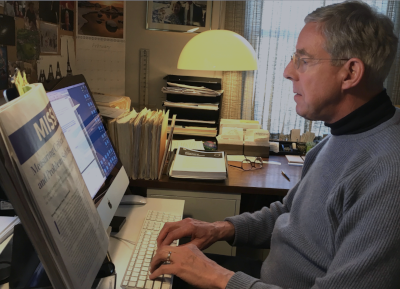

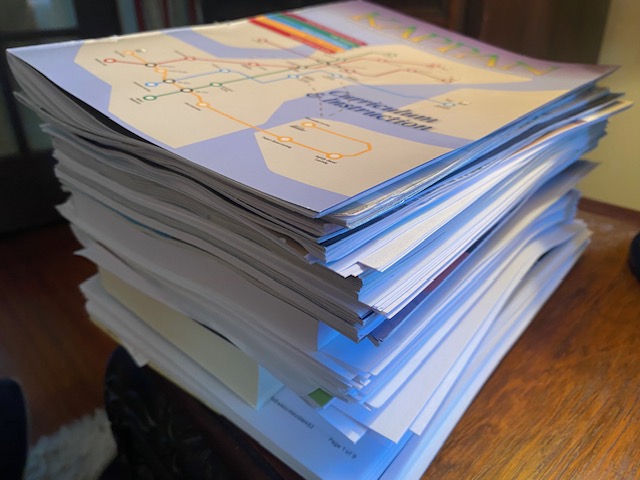
To produce the Marshall Memo, Kim subscribes to scores of carefully-chosen publications, and every Sunday reads through the 150 or so articles that arrived that week and selects 8-10 that have the greatest potential to improve teaching, leadership, and learning.
On Monday, Kim writes a brief but thorough summary of each selected article, provides links to full texts (if available), highlights a few compelling quotes, uploads the new issue to the Memo website, and first thing Tuesday morning sends the Memo to subscribers. Artificial intelligence is not used in finding articles and writing summaries.
The rest of the week, Kim is in schools coaching principals, observing classrooms, consulting with school leaders, and giving presentations. This work is what keeps the Memo grounded in the challenges and joys of frontline educators.
Kim gets invaluable support from his wife, Rhoda Schneider, who edits each issue with him, improving the writing and providing invaluable insights. Their son, Dave Marshall, and daughter, Lillie Marshall, both teachers, are an ongoing source of suggestions, including helpful online resources. Joanne Bragalone, Kim's assistant, updates subscribers, manages the database, sends out reminders, and maintains high-quality customer service. And Mike Doughty does a great job recording a podcast of each week's Memo.
What do subscribers gain from reading or listening to the Memo? For one thing, they worry less about not reading the journals and education blogs on their guilt pile. More importantly, they tap into a rich vein of ideas and resources that can help them be more effective with colleagues and students.
Some Memo summaries reaffirm what practitioners are already doing well; some boost an idea higher up the "to-do" list; and some are genuinely new and take people in a different direction. Reading the Memo provides top-notch professional development and keeps educators on the cutting edge.
Savvy subscribers use the Memo at five levels:
1. Receiving personal professional development reading each new issue (or listening to the podcast)
2. Sharing selected summaries with colleagues. The Memo is copyrighted material, but subscribers have permission to clip and share items within their school or district to spark discussions on specific topics.
3. Exploring the Memo archive at www.marshallmemo.com (password access), which has thousands of summaries searchable to author, topic, title, keyword, headline, publication, or grade level. Those highlighted in red are the "classics" - the best of the best.
4. Exploring the free, no-password Best of Memo website www.bestofmarshallmemo.org, which has super-curated collections of summaries in 26 key areas. These might be assigned to teams, read jigsaw-fashion in staff meetings, or listened to (there's a professional recording of each section).
5. Choosing an especially relevant summary and, at a faculty meeting, having colleagues read it silently (taking 5-7 minutes), discuss it in groups, and then talk it through as a staff, deciding if there are action implications. The Best of Memo website has a pull-down list of possible all-faculty article summaries.
Here is what several subscribers said about the Marshall Memo (see "What readers say" for additional quotes and 2026 Survey Monkey questionnaire results):
-
Kim is brilliant at doing an accurate précis of dense material and delivering it in a highly readable package that arrives without fail every week.
-
Exceptionally clear, succinct, yet comprehensive summaries of the articles that are most relevant.
-
An extraordinary resource for the busy educator.
-
There's no better way to be kept abreast of best practices and research than reading the informative and lively Marshall Memo.
For more information about the Marshall Memo, click on the links to the left.